
Last War Survival
Popular Games
Last Played
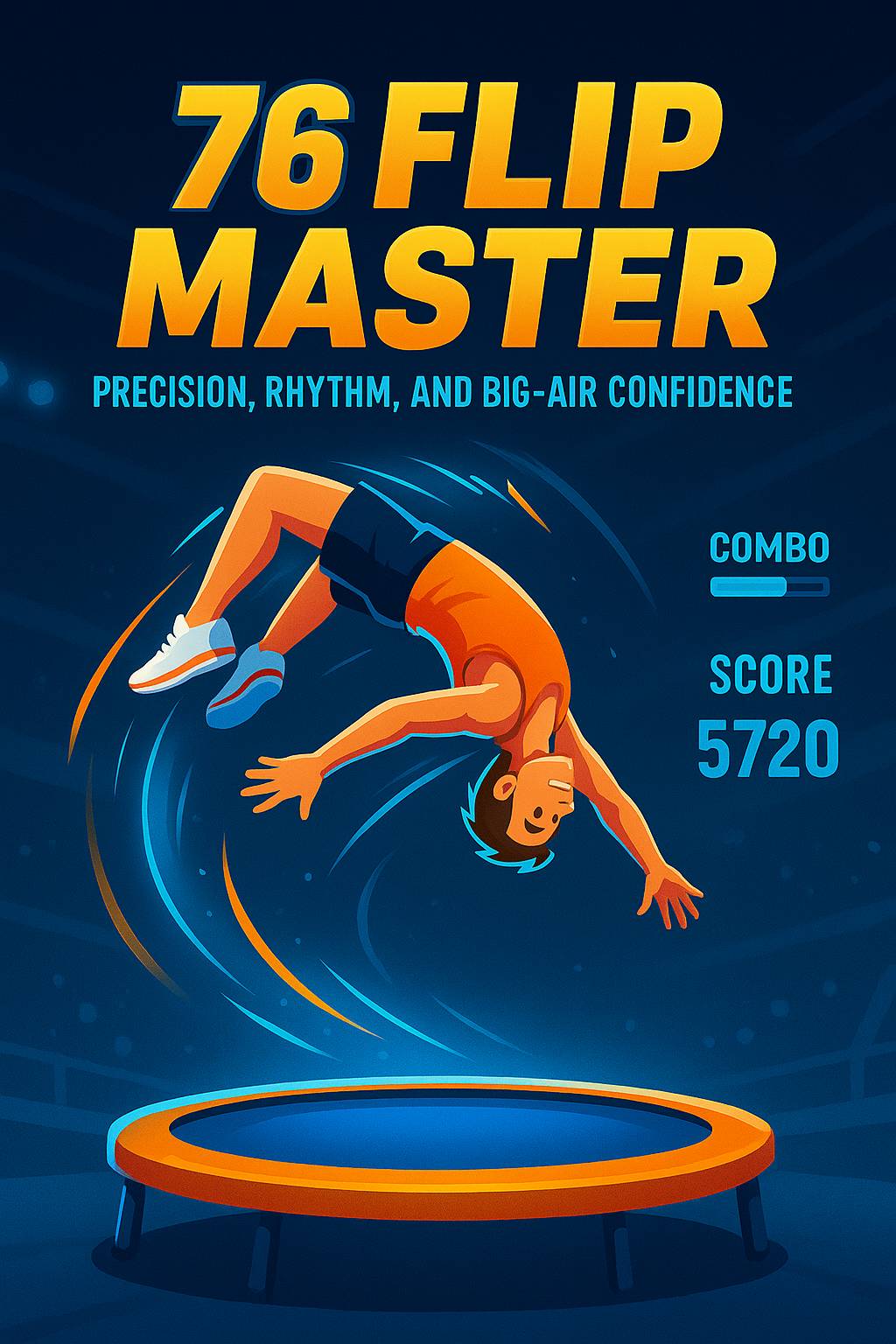
If you crave a trampoline flip game that rewards calm hands and bold ideas, you’ll feel right at home here. Your job is simple to describe and endlessly deep to perfect: spring, rotate, spot, and stick. The entire loop revolves around flip timing, clean twist controls, and a relentless pursuit of the elusive perfect landing. On poki76.com the friction disappears—instant loads, instant retries—so you can turn curiosity into mastery one jump at a time.
Great flip titles make one-touch controls feel like a musical instrument. A press begins rotation, a hold tightens tuck for precision flips, a release opens the body to slow the spin, and a micro-tilt engages twists. Because the grammar is compact, your mind is free to read height, drift, and mat position. Soon you’re chaining trick combos that look like expressive sentences: backflip → half-twist → layout stick, all tracked by the combo meter that rewards flow over flailing.
The engine blends playful ragdoll physics with deliberate motion so your choices matter. Tuck early and the world blurs; open late and you’ll over-rotate; open early and you’ll save the stick. Treat every jump like a small lab experiment. Ask: did that tuck create air-time or debt? If debt, fix it next launch with a cleaner ascent and a smoother body-open. That self-coaching habit is how a casual session becomes a clinic.
The mat judges without bias. To nail safe landing mechanics, stack hips over heels, keep chest slightly forward at contact, and freeze for a heartbeat to cancel rebound. Greed is punished here: one sloppy plant can erase an otherwise perfect sequence. Two crisp singles will outscore a messy double; your combo meter loves consistency more than chaos.
Think of your route as a living syllabus—your own flip progression. Stage 1: stick five clean singles in a row. Stage 2: add a layout exit to control drift. Stage 3: insert a half-twist at peak. Stage 4: double only when height is honest. Stage 5: thread the sequence into three trampoline tricks with a confident final stick. The more repeatable the blueprint, the faster your scores climb in a leaderboard chase.
Hope fails; height plans win. Learn the feel of “double-ready” air versus “single-plus-twist” air. On short arcs, scrap the double and go single → twist → layout. On tall arcs, commit early, stay tucked, then open with conviction. This ruthless honesty is the quiet superpower that separates highlight reels from reruns.
Good progression systems reward practice with subtle stunt upgrades. A touch more airtime, a slightly wider stick window, or improved twist stability can turn near-misses into celebrations. Spend currency on consistency first (airtime, rotation control), then on flourish (spark trails, outfits). Cosmetics are victory laps; control enhancements are victory engines.
Borrow from gymnast training: three micro-sets per session. Set A—five singles, zero drift. Set B—five singles into half-twist, eyes on the mat early. Set C—three-layout finishers with frozen sticks. Between sets, say your note out loud (“open at shoulder line,” “half-twist later”). That sentence is your next improvement.
Not sure how to chain moves? Try these reliable trick combos. 1) Single backflip → layout (confidence builder). 2) Back, back → half-twist (timing tutor). 3) Back → layout → late half (showcase, low risk). 4) Double → layout (only at honest height). Each combo trains a specific timing cue and leaves the stick clean.
Over-rotation: open earlier, then “soft knees” the landing. Under-rotation: tuck a hair longer or commit to layout save rather than forcing the stick. Drift: fix takeoff angle, not landing heroics. Panic-twist: initiate twist only after vertical clears peak; early twist steals height. These four corrections erase 80% of score-killers.
In scoring systems that value streaks, two safe singles with micro-variation outpace a single dicey double. That’s the secret of sustainable leaderboard chase runs: stack guaranteed points, then spice with a calculated risk when height is perfect and nerves are calm.
On phone, mobile flip gameplay shines for rhythm reps—thumb taps map naturally to the jump–tuck–open cadence. On desktop, pointer and keys deliver surgical timing for doubles and twist accents. Both pathways lead to mastery; pick the device that fits your focus today, and switch when you want precision sprints.
Time Attack trains calm under the clock. Sequence Mode teaches memorized aerial stunts. Endless Run turns stamina into style. Challenge Cards (no-twist, late-open, layout-only) sharpen a single skill by turning it into a game. The loop is always the same: learn a constraint, cash it out in freer modes, enjoy the skill dividend.
Three bailouts in a row? Do a “mechanic reset”: five small hops, three singles, two sticks. It’s a palate cleanser that restores body rhythm and removes panic from your thumbs. Finish the session on a clean stick even if it’s simple—your next session begins where confidence left off.
Scores are built in takeoff and landing, not mid-air flourish. A clean bend-load-spring gives honest height; an early spot gives honest opens; a frozen stick converts everything. Think of mid-air style as a multiplier on fundamentals. No fundamentals, no multiplication.
Feather-tuck: pulse the tuck to trim rotation without fully opening. Quarter-shoulder set: pre-load a slight shoulder angle to “invite” a half-twist at peak. Apex tap: a tiny release right as you crest to lock in layout position. These are simple, teachable, and priceless under pressure.
Every risky move has a safe sibling: double ↔ single + twist, blind half ↔ delayed half, push-layout ↔ soft-layout. If air or nerves slip, call the twin mid-flight. This habit protects streaks, which in turn protect scores.
Lower post-processing to reduce bloom on high-contrast mats, bump contrast so silhouettes pop, and widen FOV if motion feels tight. Clarity begets timing; timing begets sticks. The simplest settings pass is often the biggest score upgrade you’ll make all week.
Minute 1: warm-up hops. 2–3: five singles (no drift). 4–5: single → half combos. 6–7: layout finishers. 8–9: one measured double attempt at honest height. 10: write a one-line note. Short, repeatable, undefeated.
Teach a friend the “see peak → open” rule, then spot their landings. Calling cues out loud clarifies your own timing. It’s how great athletes learn—by hearing themselves explain the thing they need to do.
Open with foundation: two clean singles, one layout finisher. Check nerves. If calm and height is generous, slot a double window in attempt four or five; if not, harvest safe points and try again next run. PBs arrive as confirmed windows, not coin flips.
First buy consistency enhancers (airtime, rotation control), then comfort cosmetics, then specialty twists. The reason is simple: every session benefits from consistency; only showcase windows benefit from flourish. Invest where minutes compound.
On mobile, enable haptics for open cues; on desktop, map tuck to the most comfortable finger (index or thumb) to reduce timing jitter. If your inputs feel late, you probably placed the action on a weak finger—small ergonomics, big difference.
After your mechanics are steady, add style lines: late half into layout, open-to-spot head turn, or matching outfit colors to trick type. Style is spice; mechanics are the meal. In scoring modes, keep spice under control unless you’re already locked for the stick.
A browser-forward loop makes experimentation effortless. You load, learn, and loop again in seconds. That cadence is perfect for mastering precision flips, rehearsing twist controls, and chasing the cleanest perfect landing your thumbs can produce. The site respects short attention and rewards long focus—the best of both worlds.
Low height? Bend deeper on setup. Spin racing? Open a beat earlier and breathe out as you plant. Twist late? Spot the horizon, then cue shoulder. Drift left? Adjust takeoff, not landing. If everything feels wrong, run the mechanic reset and rebuild trust one stick at a time.
Every jump is the same problem with a different answer; that’s the magic. You’re composing with physics, painting with rotation, and signing with a stick. It’s pure, readable, and addicting because your improvements are visible in seconds.
Own the setup bounce; tuck with intent; open at the shoulders; freeze the stick. Stack safe points, sprinkle risk only when air is honest, and treat mistakes as notes for the next attempt. With that mindset, your sessions turn from “try my luck” into “execute my plan.”
Load the page, pick your drill, and give yourself ten mindful minutes. You’ll walk away smoother than you started, and the ladder from beginner to confident flipper will feel not just possible, but inevitable. And when you’re ready to flex, remember you learned it the right way—clear flip timing, steady one-touch controls, and sticks that make the mat feel like home.
When in doubt, simplify the move, perfect the landing, and climb again. That’s the quiet, repeatable path to mastery—and it’s exactly why players keep returning to 76 flip master on poki76.com.


