
Last War Survival
Popular Games
Last Played
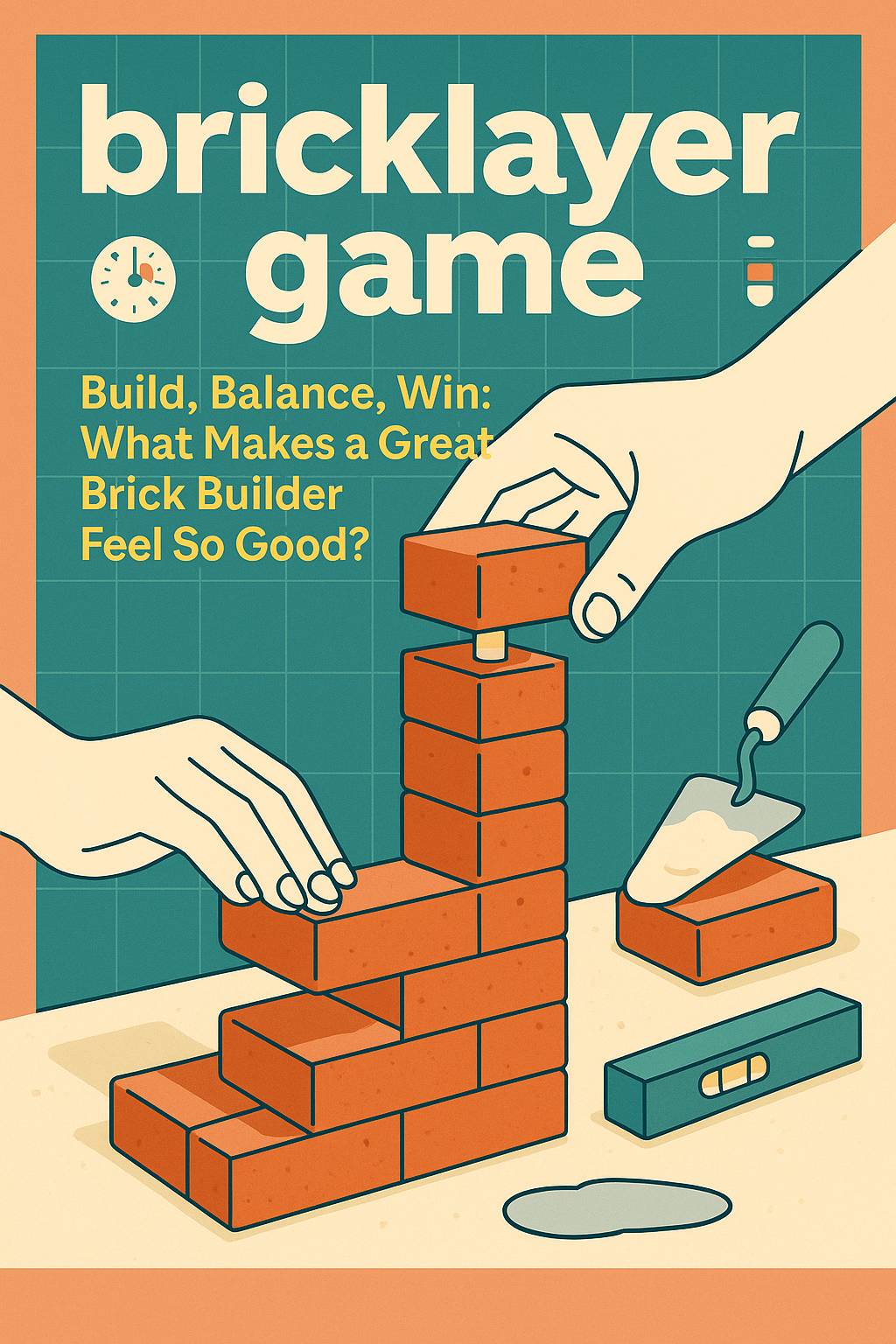
The moment you drop the first block, the rhythm of planning and placement hooks you. A strong brick stacking game isn’t just about height—it’s about foresight, reading tiny gaps, and converting shaky moments into clean, satisfying saves. On poki76.com you jump straight in, test ideas fast, and keep iterating until your hands and eyes move as one. That’s the essence of a modern browser building game: instant access, infinite refinement, and the low-friction loop that lets you learn by doing. You’ll hear me refer to the experience by its simple name—bricklayer game—a couple of times, because that’s exactly the mindset: lay bricks, own the craft, and watch your wall evolve.
Strong runs follow a calm pattern. You plan a footprint, place a course, stabilize with cross-bonding moves, then extend when the structure “breathes.” This loop turns a chaotic brick building puzzle into a steady climb. Early pieces should widen your base; mid-game pieces stitch seams; late-game pieces push height only after the foundation passes a quick wobble test. Think in courses, not single blocks.
Pros scan for edges, seams, and compression lines before they ever click. If an overhang appears, they counterweight two courses below. That’s why the best players treat the game like a tactile masonry simulator—they’re not stacking at random, they’re routing load paths. When a gap is unavoidable, they “bridge” with a longer piece and immediately lock it using the next course.
Alternating patterns reduce vertical seams and stop shear. A header after two stretchers is a simple rule that pays huge dividends. Whenever you drift into repeating seams, insert a rotational offset—your future self will thank you. This is the difference between a pretty wall building game and a resilient one.
Good controls vanish. Set rotation shortcuts you actually remember, keep your cursor near the active seam, and pre-aim before the next piece spawns. Micro-nudges are king in a precision placement game; big corrections introduce tilt and misalignments that compound five courses later.
Pieces have momentum, hitboxes, and sometimes micro-slides. If the rules model gravity, light taps settle better than hard slams. Treat every drop as a mini experiment in a physics stacking game: test, observe, adjust. When a block lands ask, “Did I add stability or debt?” If debt, fix within two courses—waiting makes interest.
Campaigns might ask for height targets, span objectives, or weight loadouts. Time attack turns everything into timed stacking levels; puzzle variants force you to draft a plan with limited shapes—classic construction puzzle game territory where order matters more than speed.
Course 1: overbuild the footprint. Course 2: offset seams and pre-place a tie for your planned cantilever. Course 3: lock the first weak edge. This trio decides 70% of your run’s ceiling. It’s why veterans rarely rush—early perfection makes late improvisation possible in a tower builder game.
Center of mass should sit over support, not air. When you balance the bricks, keep two rules: never stack three identical seams above each other, and always counter a cantilever within two courses. When in doubt, widen instead of rising; height without stability is just a fancy countdown to collapse.
If the rules give you snaps, slow-time drops, or ghost previews, treat them like precious resources. Spend previews on diagonal stitches, not easy flats. Save slow-time for late-game locks or emergency seam repairs. Power-ups should multiply skill—not replace it—in any well-designed builder skills game.
Wide slabs and long stretchers are structural; small caps and arches are decorative or situational. Resist the urge to “pretty up” early; your art pops more on a stable canvas. This is how you turn a functional run into an architecture puzzle showcase without sacrificing height.
An L-key binds a corner by wrapping across two faces. Z-bridges stitch two weak columns with a zigzag that murders vertical seams. Seam killers are single offsets inserted at the right time. Mastering these three upgrades your game from casual to clinic-level bricklaying simulation.
Tiny gaps can save you. Micro-gaps prevent bump collisions and allow correction pieces to “bite.” Think of this like a soft cement and mortar puzzle—you’re leaving space for your future fixes rather than aiming for unrealistic perfection on every drop.
Fast loads, instant retries, and no install friction turn experimentation into a daily habit. Having a dependable brick builder online means you can log quick sessions between tasks and still feel progress. That cadence is how skill compounds.
Tier 1: survive ten courses clean. Tier 2: remove triple seams entirely. Tier 3: freestyle height with deliberate cantilevers. As you climb, you’ll notice the brick wall game stops feeling like reaction and starts feeling like orchestration.
When the randomizer serves chaos, route three drops ahead. Choose a “left lock,” “right stitch,” or “center widen” plan and stick to it until the board stabilizes. Ad-hoc swapping increases errors—decisive sequences don’t. This is where a good 3D brick stacker separates itself: you can see the space in 3D and pick the least turbulent path.
Over-relying on long pieces? Practice short-piece ladders. Vertical seam ladders? Insert a header now, not later. Panic rotations on final pixels? Place earlier at a safer seam. These simple habits turn near-misses into non-events in any unblocked brick game session.
Minute 1: warm-up placements on a wide base. 2–3: seam-kill drills (no three-seam ladders). 4–5: diagonal stitches only. 6–7: cantilever practice with counters. 8–9: timed course with light preview use. 10: write one improvement. This tiny loop improves every precision placement game aspect without grind.
Desktop: lower input latency and use precise keys. Mobile: enable larger touch targets and haptic taps. Play on Chromebook with hardware acceleration on. Across the board, full-screen minimizes misclicks—your best friend in a high-stakes browser building game.
Pre-rotate one piece ahead; park your cursor over the next seam; tap-tap to micro-nudge instead of dragging; and when a tilt begins, build a wedge back toward center. These are evergreen across every tower builder game you’ll touch.
There’s a special satisfaction in finishing a course with no dangling seams. Celebrate those micro-wins. They are the backbone of big wins later, especially when a campaign throws a brutal height target at you in a construction puzzle game challenge.
Curiosity—not bravado—wins long runs. Ask what the board needs, not what you want to force. That mindset makes even the trickiest arrangements feel fair, which is why bricklayer game players tend to improve steadily rather than streak randomly.
Endless height, puzzle sets, survival timers, and challenge seeds all teach different skills. Timers sharpen decisiveness for timed stacking levels; puzzle seeds sharpen planning for architecture puzzle goals; endless height polishes consistency under fatigue.
Set micro-goals: “zero triple seams for five courses,” “one clean cantilever per run,” “offset every corner.” Hitting them builds momentum. Momentum builds mastery. Mastery builds style—your structure starts to look like it was meant to be, not barely saved.
Once stable, add arches, alternating color bands, or patterned caps. Do it late. Beauty layered on stability is what turns a session into a shareable screenshot from a brick builder online showcase.
Most modes reward continuity: no drops, neat offsets, capped courses. You’ll also see bonuses for height milestones and symmetry. But don’t chase symmetry at the cost of seams—stability first is timeless advice in every builder skills game worth your time.
Sometimes the right move is surgical removal if the rules allow it. If a rotten seam threatens collapse four courses later, delete now and rebuild clean. It feels wrong for one second and right forever—hallmark thinking in a high-level brick wall game.
A good cantilever is aggressive on top and conservative below. Widen the counter side first, then commit to the overhang. Tie with an L-key, add a header, and only then push height. Done right, it’s architectural poetry in a 3D brick stacker sandbox.
If you’re chasing time brackets, adopt a 70/30 rule: 70% safe drops, 30% risky stitches. If you’re chasing height, flip it—80% safe, 20% artistic. There’s no universal best, but there is a best for your current goal in this precision placement game.
Explain seams, offsets, and early widening. Show a two-course repair. Hand over the controls and spot only patterns, not individual moves. Teaching locks your own fundamentals tighter than any solo drill in a brick stacking game.
After a messy drop, run a “stabilize set”: two offset courses, one tie, then reassess. This three-step reset halts spirals and revives confidence, especially in faster timed stacking levels where panic is the real enemy.
Increase contrast so seams pop; reduce animation intensity if flashes distract; enable subtle gridlines where available. Comfort widens your decision window, the secret weapon in every physics stacking game.
Skill growth is visible. Yesterday you patched seams late; today you pre-empt them. Yesterday your cantilever folded; today it sings. Track one habit a day and watch your ceiling rise session by session until calling it bricklayer game feels like underselling what you’re actually building.
Personal bests come from clean foundations, not risky sprints. Stabilize the first five courses perfectly, then give yourself one stylish push per five safe courses. That ratio keeps your tower alive long enough to matter in any brick building puzzle run.
It makes intelligence visible. Every piece is a decision; every course is a sentence; every structure is a story of small disciplines done well. That’s why the phrase bricklayer game deserves to be said out loud when you nail a run—it captures both the craft and the calm joy of making something sturdy from nothing.
Broaden early, offset always, counterweight cantilevers, fix debt within two courses, and spend power-ups to multiply—not replace—skill. Practice short, daily sessions, and let your structure teach you what it needs next. With that approach, your builds on poki76.com shift from lucky stacks into deliberate, durable designs that feel awesome to create, share, and push even higher tomorrow.


