Hummer Jeep Driving Sim
Popular Games
Last Played
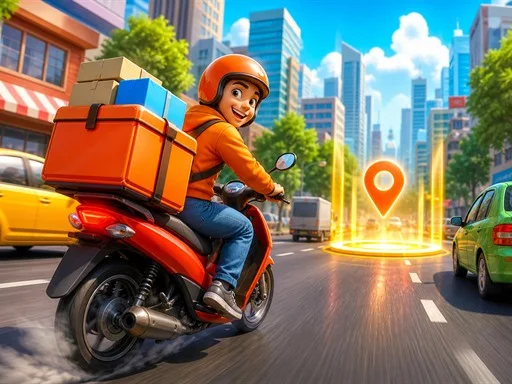
City Delivery Rider Simulator places a delivery rider inside a street network shaped by traffic, junctions, destination markers, and changing road direction. The urban setting creates variety, but the immediate task remains easy to frame: identify the visible route and preserve a clear line toward the next destination.
A street can look open from a distance and become crowded as vehicles move into the same region. Stable road edges provide the frame, while cars and other moving objects continually alter the usable path. Watching direction matters more than judging one frozen position.
The rider’s scale helps define safe spacing. Nearby vehicles occupy more of the screen and demand immediate attention; distant traffic supplies context for what may enter the route next. Clear silhouettes keep those layers separate.
A destination marker gives the journey a visible purpose, but it should not obscure the road leading toward it. The strongest cue indicates direction while leaving intersections, obstacles, and lane changes readable. After each turn, the next marker restores orientation.
Buildings, sidewalks, and roadside details establish place without replacing navigation. Repeated street surfaces connect different districts, while distinct structures can serve as landmarks when the route bends. This balance makes the city feel varied but coherent.
Visit City Delivery Rider Simulator for the live route, then browse Racing Games for other driving-focused browser titles.
The game’s readable appeal comes from movement through organized complexity. Roads create order, traffic changes that order, and destination cues rebuild a clear direction. This article stays with the confirmed public elements and does not invent cargo rules, mission rewards, vehicle upgrades, or scoring systems.
A practical viewing loop is simple: scan the next road section, notice moving traffic, confirm the marker, and then reassess after the rider changes direction. That rhythm keeps attention close to the current journey without losing the wider city.
Reaching a marked area is only part of reading the route. The final street segment may contain a curb, entrance, parked vehicle, or narrow approach that changes how the rider should align. Slowing the visual scan near the destination makes those local details easier to distinguish.
The destination then becomes a new landmark rather than the end of the city’s structure. Its position explains how the completed route connects with surrounding roads and gives the viewer a stable point from which another journey could begin.