Hummer Jeep Driving Sim
Popular Games
Last Played
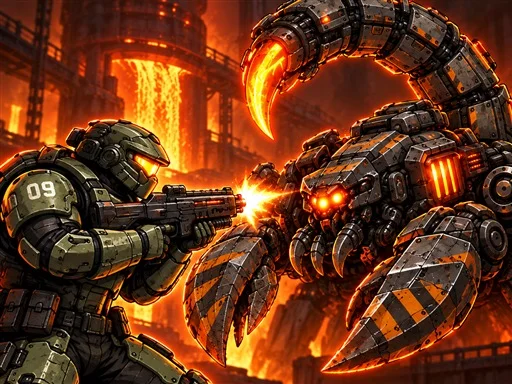
Hellforge: Demon Protocol is described as a 2D side-scrolling run-and-gun campaign set across twenty industrial missions. The supplier names patrol soldiers, shield troops, gatling brutes, mech hounds, berserkers, traps, weapons, and bosses. That unusually detailed outline gives the game a clear identity: horizontal movement through mechanical spaces where different threats interrupt the route. Here is a quick factual read before the live interface explains the exact controls.
A side-scrolling mission makes direction immediately important. The visible path extends across the frame, while machinery, platforms, and obstacles divide it into smaller decisions. Industrial scenery can establish pressure through narrow passages and hard-edged silhouettes, but the source does not provide a map or the order in which its environments appear.
The horizontal view also keeps nearby threats and the route in the same composition. A player can compare the character’s position with an approaching soldier, trap, or machine without relying on a first-person perspective. Exact movement speed and collision rules belong to the running game.
The named enemies suggest visual variety. A shield troop should be distinguishable from a gatling brute, while a mech hound has a different profile from a patrol soldier. This observation does not define their statistics or behavior. It explains why clear shapes are useful in a busy action scene.
The supplier says bosses return later as elite enemies. That statement indicates repetition with added pressure, but it does not identify which mission contains each encounter or how the elite versions differ.
Six weapons are mentioned alongside grenades, armor, and shields. Two weapon slots mean selection matters, although the listing does not document a best combination or switching controls. The current game must show which equipment is available and how pickups work.
Dodging and checkpoints add two more points of reference. One concerns immediate movement; the other concerns progress through a mission. Both can be acknowledged without turning this article into an unsupported strategy guide.
Hellforge: Demon Protocol has a more specific outline than a generic shooting label. Its industrial route, varied troops, traps, limited lives, and stated campaign length create a recognizable framework. Visit Hellforge: Demon Protocol to see the live controls, or browse Shooting Games for other action titles. The key is to read the route and threat silhouettes first, then let the game explain the exact timing of movement and weapons.
That separation between confirmed scope and live instruction keeps the preview useful without turning named features into guessed rules.