
Last War Survival
Popular Games
Last Played
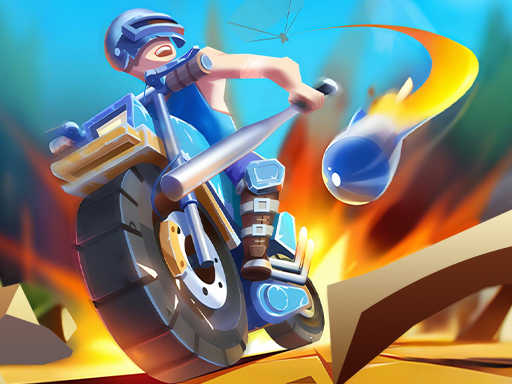
You launch, the engine hums, and the road starts talking in curves and bumps. A great moto attack session compresses the joy of motorcycle racing into seconds: press to surge, lean to stabilize, flick to dodge, and commit when a ramp or barrier demands belief. Because it runs as a polished browser game with modern HTML5 games tech, the friction is near zero—no installs, no updates, just skill. That low barrier lets the loop shine: see → decide → execute → learn. With honest physics-based handling and snappy feedback, every clean line becomes a tiny personal victory, and every wild save is a story you’ll want to retell.
Beneath the neon and dust, the rules are simple and generous. Your throttle defines momentum, your lean determines stability, and your route selection creates opportunities. Tiles, rails, and obstacles are readable at speed; timers and checkpoints put structure around chaos; and the time trial clock converts ideas into proof. You aren’t grinding stats—you’re refining judgment. That’s why these runs feel addictive: the game makes your best habit today the baseline for tomorrow, and the scoreboard keeps you honest without feeling harsh.
On desktop, crisp WASD controls (or arrows) give you throttle and lean you can trust; bind restart close to movement so you can iterate instantly. If there’s controller support, light trigger curves make throttle modulation buttery while small dead zones protect micro-corrections on rails. On mobile, big touch controls with generous hitboxes turn thumbs into instruments; a two-button scheme (gas and brake/lean) often beats a cluttered UI. Whatever you play on, prioritize steady frame pacing over peak FPS; consistency preserves jump arcs and landing timing your muscle memory depends on.
A bike that talks back clearly makes you brave without being reckless. Good physics-based tuning gives weight to the chassis, spring to the suspension, and grip that makes sense on each surface. You’ll quickly internalize three micro-techs. First, the nose tap: a tiny brake before a lip to flatten a landing. Second, the preload: compress suspension at the crest and release for a clean, higher arc. Third, the pendulum: use throttle vs. brake midair to swing the bike into a safer angle. Stack these with calm lean control and even skinny beams stop feeling like tightropes.
Level design is a language. Low rollers are commas—short breaths for throttle discipline. Tall kickers are exclamation marks—commit or pay. See-saws demand absorb-then-release; staggered steps reward the preload; long flats are free time to settle tilt and plan the next feature. Designers telegraph safely with color, silhouette, and contrast: steel rails are strict, wooden bridges flex, mud steals momentum, ice widens braking distance. When you can “read” those signals in motion, you stop guessing and start routing.
A strong playlist rotates time trial sprints, checkpointed routes, endless survival, and stunt-focused sections. Sprints teach line economy; checkpoint routes invite controlled aggression; endless modes refine rhythm and fatigue management; stunt sets celebrate expressive riding with wheelie chains and clean landings. Optional leaderboards create friendly rivalry—push your PB, then race a friend’s ghost and swap coaching notes between runs.
Think in three beats for every feature: approach, commitment, exit. Your approach sets visibility; your commitment locks a line; your exit decides the next two rooms. Protect sightlines over greed—seeing a little more road beats carrying a little more speed into blind edges. Trade pace for stability entering rails; cash that stability back exiting onto flats. The fastest ride is the one that never hemorrhages momentum to avoidable scrapes.
Good systems create choices, not autopilot. A short nitro boost is best on stabilized flats; a temporary shield forgives one greedy touch but shouldn’t enable reckless lines; magnets for coins or parts are icing, not a detour. Smart free online games keep economies cosmetic: liveries, trails, and helmets celebrate practice while leaving physics intact. That means your improvement comes from skill, not a wallet.
A browser-native bike challenge makes practice easy to slip into your day. On poki76.com, a tidy canvas, fast fullscreen toggle, and instant restarts keep attempts stacking without downtime. These mobile-friendly builds run smoothly across laptops, tablets, and phones, so your route knowledge travels with you. Want a two-minute break? Hit a time trial. Got ten? Build a playlist—rail map → jump map → mixed terrain—and chase one PB per session.
Desktop rewards surgical inputs and wide-screen readability, especially on rails and step-ups. Mobile rewards rhythm, patience, and clean timing windows. Treat your phone as a technique lab—practice calm landings and lean discipline—then do leaderboard pushes on hardware where your precision peaks. Because good HTML5 games share biomechanics across devices, habits transfer cleanly in both directions.
Update your browser, close heavy tabs, and cap FPS if your laptop hunts. Turn down bloom until ramp lips and beam edges pop; raise contrast if sky colors bury slopes. Keep hardware acceleration on unless you’re troubleshooting; it usually reduces stutter in complex scenes. On mobile, lock orientation, disable excessive haptics, and pick a palette that keeps edges legible in daylight.
Wood flexes—be patient, and that flex returns energy if you time the preload. Steel rails demand square entries and steadier throttle; embrace a tiny speed loss to protect control. Gravel wants earlier braking and gentler lean; mud punishes sudden throttle; ice asks for feather-light corrections and longer planning horizons. Mixed-material gauntlets want a “two corners ahead” mindset: protect the exit of the feature you’re in to stabilize the entry of the one you can’t see yet.
Some routes sprinkle rivals or light contact zones. Treat them as moving obstacles that obey predictable lanes and speeds. Use position, not brute force: set up passes on flats, avoid midair tangles, and never turn a clean landing into a brawl. When drafting exists, tuck for extra pace before a climb; when slipstreams are absent, don’t chase ghosts—ride your line and force others to make the mistake.
Momentum matters. The best builds make “Play again” a single click, show meaningful post-run stats (time, clean sections, near-miss count), and get out of the way. A playlist or “Next course” button preserves focus. That design respects the arcade soul of moto racing: feel the improvement, don’t menu your way to it.
Day 1 (15 min): settings & sightlines—bind restart near movement, lower bloom, learn one track’s safe line. Day 2 (15): ramp literacy—practice nose taps and preloads on a mellow jump map. Day 3 (15): rails and beams—square entries, accept less speed, aim for zero scrapes. Day 4 (15): mixed materials—alternate wood/steel/mud; name the adjustment out loud before each feature. Day 5 (15): time trial sprints—three PB attempts; analyze the first mistake after each. Day 6 (10): pressure—run a short playlist with no restarts; save a replay. Day 7 (any): joyride—stunt-focused map for flow; end on a clean line rather than a PB chase.
Overshooting lips? Your throttle is spiky—settle to neutral as you leave the ramp. Constant nose-dives? Tap brake earlier at the crest or ease gas a hair before takeoff. Tail slaps killing speed? Blip throttle midair to tuck the rear. Falling off beams? Your entry isn’t square—straighten one bike length sooner and trade 3% speed for 100% stability. Jittery runs? Cap FPS, refresh the tab, or switch to fullscreen—stable timing grows confidence.
A gentle spring thunk tells you the preload stuck; a rubbery “skid chirp” warns of traction loss; a clean checkpoint pop resets your cadence. Keep SFX slightly above music so they cut through. If offered, a reduced motion toggle and color-blind friendly palette help the eyes; audio then becomes your early-warning system for the moments your sightline gets busy.
Short, purposeful sessions keep energy bright. For kids, set a one-goal rule—hold a wheelie across three bumps, or finish a rail without scrape—and celebrate clean attempts more than raw time. Use standard (non-admin) profiles, keep the window in view of an adult, and prefer family-friendly tags when you curate a playlist. Joy grows when everyone can read the road and feel their progress.
Look for four truths. One: it launches cleanly as a browser game—no mystery downloads. Two: inputs respond within five actions, and controls are documented clearly. Three: edges and lips stay legible at speed—no bloom burying slopes, no UI in the center lane. Four: instant restart is a single key or tap. Bonus points for visible leaderboards, an honest time trial mode, and friendly mobile-friendly tuning that never hides physics behind flashy filters.
Decide your win condition before the run: safe clear or PB push. If you pick safe, brake earlier, square entries, and protect exits. If you pick PB, be greedy only where visibility and stabilization are guaranteed. Breathe on flats, exhale into jumps, and never re-engage a bad approach—reset and try a tidier line. Calm rides compound; frantic ones don’t.
Write three rules you’ll follow under pressure: “square before rail,” “tap brake at the lip if unsure,” and “commit only with a clear exit.” Add one weekly experiment—“earlier throttle lift on ice,” “later preload on flex bridges,” or “wider setup angle before step-ups.” Treat results as notes, not judgments; curiosity moves the needle faster than pride.
Clean clears feel physically satisfying: a landing that’s perfectly flat, a rail that hums under a steady lean, a last-second save that you meant—not luck, but execution. That’s the magic of this subgenre: your hands learn the language of the bike, and the bike rewards honesty. Ten minutes later, you’ve got one more personal best and a calmer brain.
Protect visibility first, speed second. Prefer stable frame pacing to flashy filters. Standardize inputs—WASD controls, refined touch controls, or tuned controller support—and master three micro-techs (nose tap, preload, pendulum). Spend nitro boost only on stabilized flats; square beam entries even if it costs a heartbeat. Keep sessions short and purposeful; chase one PB or one cleaner clear per day. With those habits, moto racing in your browser stops being a diversion and becomes a craft you can feel improving with every ride.
Pick a readable starter course on poki76.com, run two safe clears to map sightlines, then take one honest PB attempt. If it lands, celebrate. If it doesn’t, note the first fix—earlier lift, squarer entry, calmer exit—and pocket that lesson for next run. Do this a few days in a row and you’ll understand why so many riders stick around for “one more try.” And if a friend asks what to search, point them to moto attack and let the road do the explaining.


