Hummer Jeep Driving Sim
Popular Games
Last Played
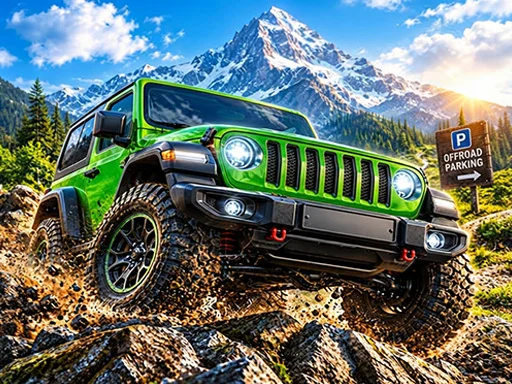
Offroad Jeep Game 2026 brings a jeep, rough ground, slopes, and dirt tracks into a direct off-road scene. The fastest way to understand it is to ignore distant decoration for a moment and read the terrain immediately ahead of the vehicle.
Off-road space gains character from height changes. A rise can hide part of the next section, while a descent shifts attention toward the surface below. The jeep provides scale, making steep sections, narrow turns, and open ground easier to compare.
Dirt color and wheel tracks can connect separate pieces of the route. Rocks, vegetation, and barriers work best as secondary landmarks rather than visual noise. Their position helps show where the usable path ends.
A bend becomes clearer when the outer edge remains visible before the vehicle reaches it. Looking beyond the front of the jeep helps the viewer understand how the current angle relates to the next section. This is a visual observation, not a claim about undocumented handling physics.
The landscape may be wide, but the active route needs a simple hierarchy: vehicle first, immediate ground second, future direction third. Background mountains or trees establish atmosphere after those practical references are secure.
Visit Offroad Jeep Game 2026 for the live route, then browse Racing Games for more driving-focused browser titles.
The strongest quality of Offroad Jeep Game 2026 is the way uneven terrain changes an otherwise familiar road scene. Each slope, edge, and patch of open ground asks for a fresh visual comparison. Clear silhouettes and stable route markers keep that variation understandable without requiring exaggerated claims about modes, upgrades, missions, or rewards.
A useful viewing rhythm is brief: scan the surface, confirm the vehicle’s alignment, notice the next boundary, and then reassess after the scene moves. That loop keeps attention on the published material and gives the off-road landscape a practical visual logic.
Texture can reinforce direction when it stays secondary to the route edge. A lighter strip of dirt, repeated tire marks, or a change in ground color can connect the foreground with a section partly hidden by a rise. These clues are most useful when they agree instead of pointing toward competing paths.
The result is a scene that feels rugged without becoming visually random. A stable horizon also helps separate distant atmosphere from immediate driving space, while consistent shadows reveal changes in slope without hiding the track. Together, these references keep the next stretch understandable before the jeep reaches it.