Angela Perfect Valentine
Popular Games
Last Played
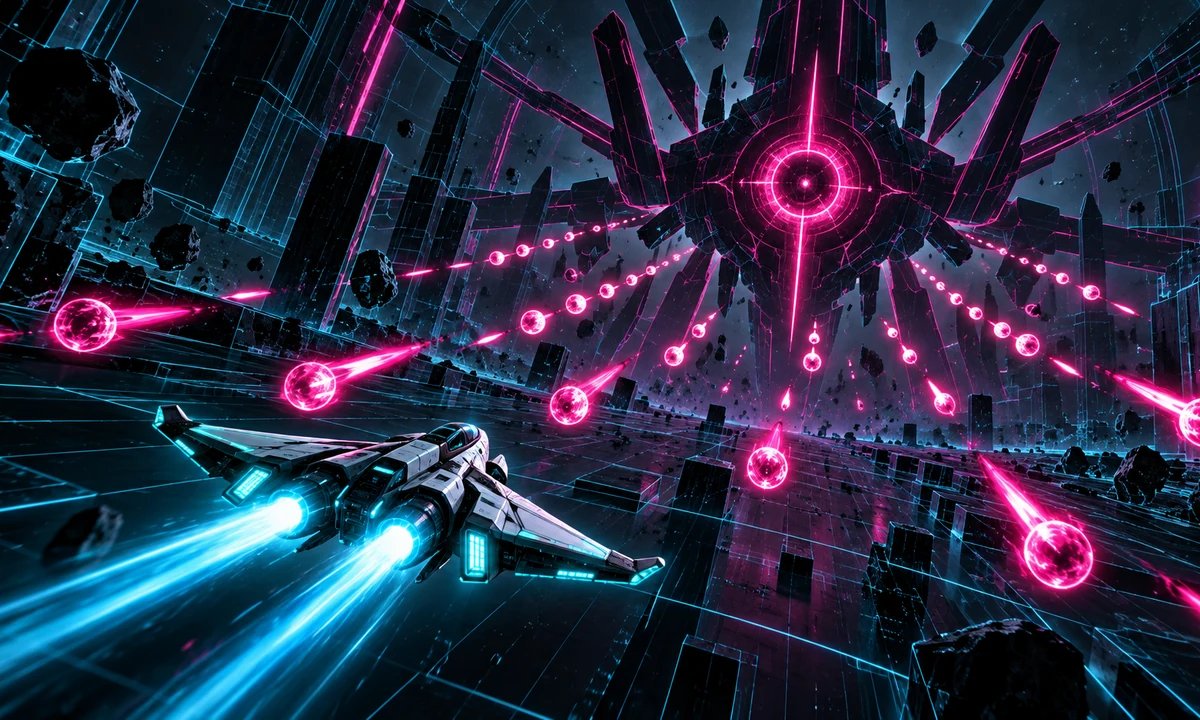
Vector Strike builds its arcade pace around neon sectors, enemy fire, collectible upgrades, and ten boss encounters with exposed weak points to identify. The defined stages give the space shooter a clear sense of progression.
A sector-based structure gives the run a visible rhythm. Each stage is a contained piece of action rather than an undefined stretch of space. That makes the next goal easier to understand: navigate the current field, respond to incoming shots, and reach the boss encounter. The listed count of sectors and bosses gives players a concrete sense of progression without requiring a sprawling map.
The design depends on keeping several moving elements readable at once. The fighter has to move through the arena, enemy projectiles cross its path, and a boss occupies more attention as the encounter builds. The neon wireframe look supports that arrangement by making the space feel geometric and high contrast. It is a useful visual choice for an arcade shooter, where a player needs to identify danger and target quickly.
The description highlights weak points that expose a boss core. This gives the large enemy a readable structure: the player is not only firing at a broad silhouette but looking for the vulnerable area described by the game. Movement and aim therefore share the same task. Positioning helps avoid incoming fire, while a better line toward the weak point helps turn an opening into progress.
That relationship makes a boss encounter more than a test of how long the player can keep shooting. It asks for a shift in attention between the surrounding field and the target itself. The player has to notice what is dangerous now and what is worth aiming at next. The supplied details do not explain the exact timing of each boss phase, so it is best to treat the exposed core as the confirmed focal point and learn its timing during play.
Autofire provides one way to handle the constant action, while manual firing lets the player decide when to shoot. This is a small option with a meaningful effect on feel. Automatic shots can leave more attention available for movement; manual input can make firing feel more deliberate. Neither mode is presented here as universally better. The useful choice depends on what the current screen demands and how the player prefers to coordinate movement with attacks.
Collectible upgrades add another layer to the run. The listed arsenal includes rear shots, missiles, shields, and split fire. Those names suggest different attack or defensive roles, but their precise behavior should be learned from the game’s own cues rather than assumed from the labels. The design benefit of collecting upgrades is clear at a broad level: the player has another decision to make while navigating each sector.
Wireframe geometry signals a digital arcade space rather than a realistic battlefield. That keeps the presentation aligned with the straightforward structure of sectors and boss targets. A strong contrast between the fighter, hostile fire, and larger enemies can help the player stay oriented. The game description emphasizes neon sectors and large bosses, so those are the visual elements that carry the identity of the experience.
Vector Strike’s appeal rests on a compact loop: move through a defined sector, manage incoming fire, collect upgrades, and read the weak points of a boss. Its strongest design idea is the way movement and targeting must happen together. The visible stage count gives that loop a destination, while the choice between autofire and manual firing lets players shape their own rhythm.
Browse the Shooting Games category for more action, or return to the Poki76 homepage to explore the full collection.